





Stay Sharp Blog
Explore expert insights, brand stories and practical tips from the team at Arrow Uniforms. From sustainable workwear trends and ethical sourcing to cost-saving strategies and uniform care, the Stay Sharp Blog helps you make informed decisions that keep your team looking sharp and performing at their best.
Stay Sharp Blog
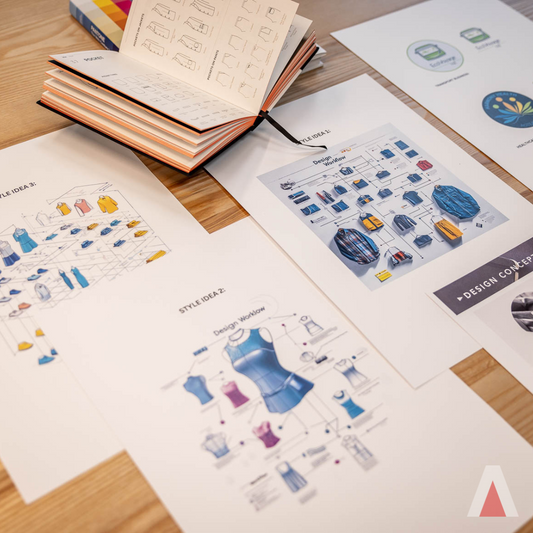
From Runway to Workwear: What NZ Fashion Week Teaches Us About Uniform Innovation
As Aotearoa gears up for NZ Fashion Week, there's a renewed focus on how style meets purpose – not just on the runway, but in the workplace too. While high fashion often steals the spotlight, there's another kind of design quietly shaping how people feel, perform, and represent their teams: the modern uniform.
At Arrow Uniforms, we believe that uniforms can do more than serve a function – they can reflect brand identity, empower teams, and stay ahead of fashion and sustainability trends. So, what can NZ Fashion Week teach us about uniforms? Quite a lot.
1. Fashion Isn't Just for the Catwalk – It Belongs in Every Workplace
Fashion Week celebrates creativity, identity, and self-expression – values that are just as important in workwear. Whether it's a healthcare professional, a retail associate, or a hotel concierge, how a uniform look and feels matters.
Fabric drape, fit, and comfort aren't just fashion luxuries – they're essential for all-day wearability.
Colour palettes influence how teams are perceived, from trustworthiness in healthcare blues to hospitality's warm neutrals.
Arrow Uniforms works closely with industry professionals to craft garments that balance runway inspiration with real world practicality.
2. Sustainability Is Now a Style Statement
Fashion Week 2025 has sustainability front and centre – a movement long embraced at Arrow. From eco-fabric innovation to closed-loop recycling initiatives, we've always believed that what's good for the planet can still look (and perform) great.
We use recycled polyester, biodegradable packaging, and ethically sourced fibres
Our customers benefit from durable designs that reduce turnover and landfill waste
The shift toward sustainability in fashion reflects principles already central to uniforms – durability, responsibility, and innovation.
3. Trends That Translate: Style with Substance
Some of the themes showcased this year – layered textures and clean, contemporary lines – also have a natural place in uniforms. These approaches allow teams to look modern, feel comfortable, and move with confidence throughout their day.
Arrow takes inspiration from design movements while ensuring every garment delivers on durability functionality, and professional polish.
4. Collaboration Is the New Luxury
Much like the designer-collaborator model at Fashion Week, Arrow believes in co-creation. Our design team partners with customers to develop bespoke solutions that speak to their brand values and operational needs – from custom embroidery to fit testing and rollout support.
Every uniform tells a story – we help you write it.
5. It's Time to Rethink What "Uniform" Means
Uniforms were once about standardisation. Today, they're about cohesion. At Arrow, we design uniforms that:
Strengthen brand identity
Enhance customer trust
Support comfort and movement
Just like the designers at NZ Fashion Week are redefining the role of clothing, we're redefining the role of workwear – not just for show, but for real life.
Final Stitch: What NZ Fashion Week and Arrow Have in Common
Both celebrate design with purpose, a commitment to innovation, and a platform for identity. As we admire the innovation happening on the runway, we're equally proud of the progress happening behind the scenes – in hospitals, on retail floors, in hotel lobbies – wherever professionals rely on uniforms designed to work as hard as they do.
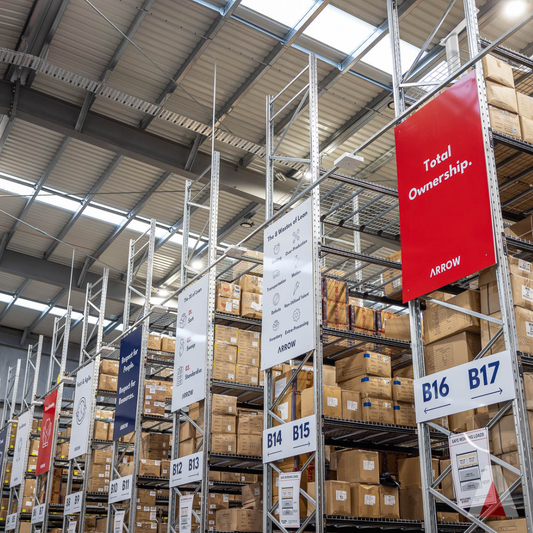
Bulk vs On-Demand Uniform Supply: Which Model Fits Your Team Best?
Once you've got your brand and identity sorted out, you need to order uniforms for your team.Uniform procurement isn't just about how many items you order, it's about choosing the supply model that fits your business.
The way you source uniforms can influence cash flow, sustainability, staff satisfaction, and operational efficiency.
Some organisations thrive on bulk ordering. Others need the agility of on-demand fulfilment. Increasingly, many are choosing a hybrid approach.
They key is finding the model, or combination, that works for your workforce, budget, and long-term plans.
Bulk Ordering: Efficient, Scalable – Best for Stability
Best suited for:
Stable headcounts
Centralised teams
Predictable uniform usage
Benefits
Secure volume discounts (often 10-25% savings depending on quantity and branding)
Roll out new designs across your entire team at the same time
Centralise distribution and maintain consistent quality control
Trade-offs:
Requires accurate sizing predictions – errors can lead to reorders and delays
You may order too much stock tying up valuable cash
Storage and inventory management become essential (and resource-intensive)
Front-loading costs can impact cash flow and limit flexibility if team structures change
On-Demand Supply: Flexible, Sustainable – Best for Change
Best suited for:
Remote or rotating teams
Seasonal or project-based hiring
High staff turnover or role changes
Benefits:
Staff order their own sizes, reducing misfits and returns
Eliminates overstocking and warehousing needs
Supports personalised branding or role-based variations without excess risk
A 2023 Unifi study found that on-demand systems can reduce uniform waste by up to 30% thanks to fewer excess units and more accurate sizing
Trade-offs:
Slightly higher per-unit cost
Relies on robust supplier technology and fulfilment infrastructure
The Hybrid Model: Control Meets Agility
For many organisations, the best option is both.
Typical approach:
Bulk orders for standard, stable needs
On-demand top-ups for new hires, size changes, or seasonal shifts
Why it works:
Achieves volume savings on core needs
Maintains flexibility for changes in staffing or branding
Reduces waste and improves sustainability outcomes
Increases team satisfaction with better fit and timely delivery
Key Questions to Find Your Best-Fit Supply Model
Ask yourself:
How often does your team change or grow?
Do you have storage capacity for stock?
Is branding consistent or varied by role/site?
Are you aiming to reduce waste or streamline admin?
Do staff work across multiple locations or shifts
The right model should support performance, sustainability, and morale – not just procurement.
If in doubt, ask Arrow Uniforms!Our expert team have deep experience across both approaches and can make a recommendation to you on what would work best all things considered. Sometimes it's timing of rollout, sometimes it's cash, sometimes it's having an appropriate employee internally to manage the ordering issuing and stock levels of your uniforms. Sometimes it's best to leave it to a specialist uniform company like Arrow Uniforms.We will advise you on what the options are for you to decide.
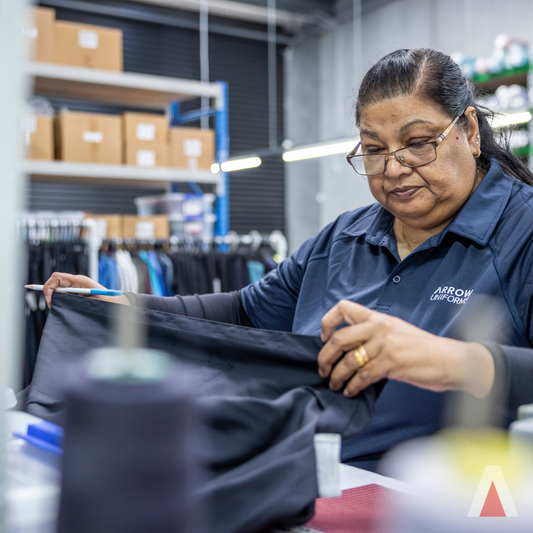
The Subtle Art of Waistbands: One-Piece vs Two-Piece Trousers
When it comes to trousers, not all waistbands are created equal. In fact, the way a waistband is constructed says a lot about the garment's purpose, durability, and quality. At Arrow Uniforms, we know that understanding these details helps businesses choose the right workwear – balancing comfort, practicality, and presentation.
One-Piece Waistbands: The Workwear Standard
Work trousers, cargo pants, and many shorts are typically built with a one-piece waistband. True to its name, the waistband is made from a single continuous piece of fabric, without a seam at the centre back. If you look at a pair of jeans, you'll see exactly what we mean – simple, strong and built to last.
Why this matters for workwear:
Durability first – The single construction offers fewer weak points for stress, making it ideal for heavy-duty use.
Cost-effective – Faster to produce and more economical without sacrificing performance.
Low maintenance – Designed for teams who need practicality and ease of wear day in, day out.
Two-Piece Waistbands: The Tailored Touch
In contrast, two-piece waistbands are the hallmark of dress and corporate trousers. Constructed from two separate pieces joined at the centre back, this design is a nod to traditional tailoring and offers a level of adjustability one-piece waistbands simply can't match.
Why this matters for dress wear:
Adjustability – Can be taken in or let out by up to 3cm, ensuring a better fit over time.
Premium finish – Often includes features like rubberised inserts to keep shirts tucked, lining for comfort, and overlocked raw edges for a clean interior finish.
Refined aesthetics – Perfect for corporate environments where presentation is paramount.
So Which Type of Waistband is Best?
It depends, both are good!It comes down to the type of trouser and its intended end use. Generally, a trouser with a two-piece waist band will be worn in a formal or corporate situation, whereas a casual trouser will have a one-piece waistband. Like Jeans!
So in summary:
Workwear & Casual Trousers (like chinos, cargos, and jeans) → One-piece waistband for robustness and simplicity.
Corporate, Formal & Dress Trousers → Two-piece waistband for customisation, elegance, and superior tailoring.
The key takeaway? The waistband isn't just a structural element – it's a design choice that impacts the garment's function, comfort, and image. By selecting the right type for the job, you ensure your team looks and feels the part, whether they're on the workshop floor or in the boardroom.
Ready to find the perfect fit for your team?Arrow Uniforms offers trousers that balance function and style – whether you need the rugged reliability of a one-piece waistband or the tailored sophistication of a two-piece.
Talk to our team today to explore our full range of workwear and corporate trousers.
Smart Uniform Procurement: How to Stay on Budget Without Cutting Corners
Uniform procurement isn't just a line item, it's an investment in your people, your brand, and how your team performs. But without structure, costs can quickly creep beyond what was forecasted.
The good news? Staying on budget doesn't mean cutting corners. With the right systems, planning, and supplier relationship, procurement can shift from reactive to strategic – delivering more value, not just more cost control.
1. Zoom Out: Understand the Lifecycle Cost of Uniforms
It's easy to focus on the per-unit price. But that's only part of the picture.
Smart procurement teams take a lifecycle view, accounting for:
Freight and logistics costs
Branding and embellishment charges
Sizing errors or returns
Rush or one-off orders
Stockouts due to seasonal shifts or unexpected team growth
Administrative overhead for ad hoc requests
When you factor in these often-hidden costs, the cheapest item upfront may not be the most cost-effective long term.
2. Plan in Advance, Avoid the Panic Premium
One of the fastest ways to blow your budget? Last-minute orders.
Urgent dispatches often attract:
Express freight charges (especially if airfreighted)
Limited product availability
Reduced branding flexibility
Increased room for sizing or style errors
Mapping out your team's uniform needs on a 6-12 month cycle eases pressure, unlocks volume pricing, and reduces repeat admin. Suppliers like Arrow can support this process – building in supply windows and buffer stock to suit your forecast.
3. Use Digital Tools to Track and Forecast
Visibility drives smarter spending.
With a uniform management system like myArrow™, you can:
Track team orders by individual or location
Flag over- or under-utilised items
Set access permissions and budgets
Review order history and repeat usage patterns
This data helps you refine your offering, reduce duplication, and ensure stock decisions reflect real usage – not assumptions.
4. Simplify the Range Without Sacrificing Choice
Each added SKU increases inventory demands, admin load, and potential for confusion.
Instead, streamline your product range to cover multiple roles – then offer flexibility through:
Interchangeable layers
Role-specific accessories
Optional branding zones
This keeps the system lean without compromising on function, team identity, or inclusivity.
5. Set a Regular Review Rhythm
A simple quarterly check-in with your supplier can deliver outsized returns. Use these sessions to:
Review order data and performance
Flag upcoming team or operational changes
Adjust size curves or seasonal projections
Identify consolidation or cost-saving opportunities
Small adjustments – such as aligning branding to stock or refining order minimums – can lead to significant long-term savings.
Make Uniform Procurement Work Harder – Not Cost More
With the right systems and partnerships in place, uniform procurement becomes less about cost-cutting – and more about value creation. It supports your people, protects your brand, and frees up operational bandwidth.
How Arrow Can Help
Arrow Uniforms offers practical tools and ongoing support to help you streamline procurement, reduce waste, and stay on budget:
Resource
What It Does
MyArrow™ Portal
A centralised platform for ordering, tracking, and managing staff entitlements. Built-in reporting makes forecasting and budgeting simple.
Range Rationalisation Support
We help you review and simplify your uniform range—reducing complexity and cost while retaining practicality and inclusivity.
Supply Cycle Planning
Forecasting tools and expert guidance to help you build a 6–12 month procurement plan aligned with seasonality and operational shifts.
Sustainability Cost Review
Insights into the true cost of ownership for sustainable garments, including care, lifespan, and end-of-life options like AROUND®.
Quarterly Business Reviews
Optional sessions to track performance, update forecasts, and find efficiencies across your uniform programme.
Lets Make Your Uniform Budget Go Further
Ready to take control of your uniform procurement? Let's build a plan that reduces costs, improves efficiency, and grows with your team.
Why Lab Dips Matter in Uniform Manufacturing
When clients receive their uniforms, they expect consistency – across sizes, styles, and especially colour. But few realise just how much work goes into making sure every garment is dyed to exactly the right shade. That precision starts not on the production floor, but in a laboratory, with something called a lab dip.
At Arrow Uniforms, we take this step seriously, because getting colour right isn’t optional. It’s essential.
What Is a Lab Dip
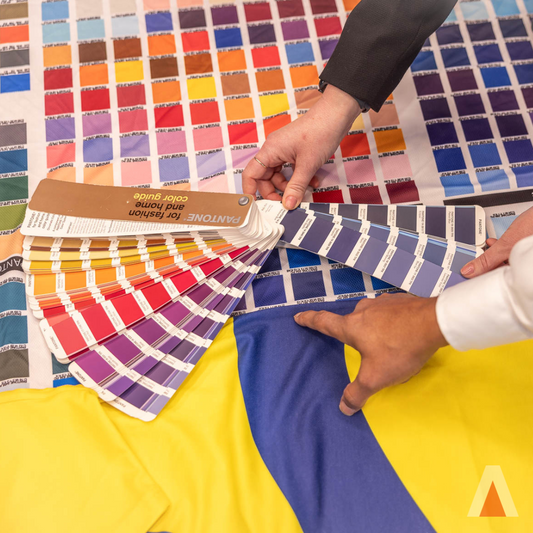
A lab dip is a small sample of fabric that’s been dyed in a lab to test and demonstrate a colour match before full-scale fabric production begins. It's the very first checkpoint in ensuring a uniform meets brand and quality expectations.
The process begins with a colour reference – often an existing garment or a Pantone (PMS) code. The dye house then creates several versions of the formula to find the closest match. Each sample is dyed, dried, labelled, and cut into a small swatch – then sent to us for review.
Precision Over Assumption
These swatches aren’t approved lightly. Internally, we compare them to existing garments or other pieces in a range. In many cases, the client is also involved, particularly for branded ranges. Everyone from production to account management weighs in – because what looks right under one light may look very different under another.
Once a lab dip is approved, that exact dye formula becomes the reference point for bulk production and any future reorders. That’s what allows us to maintain consistency over time – even as fabric runs and dye batches evolve.
It Doesn’t Stop There
Before production begins, a length of the final dyed fabric is sent to us again. We review this against the approved lab dip – another checkpoint before even a single garment is sewn.
If it doesn’t match? We don’t move forward.
Sometimes fabric can be redyed or adjusted. In other cases, the dye lot must be redone entirely – starting from the greige (raw) yarn stage. It’s not ideal, and yes, it can cause delays. But what’s worse than waiting? Delivering uniforms that don’t match.
Why This Matters
Uniforms are a visual extension of a brand. A mismatch in colour – even by a few shades – can undermine the professionalism and cohesion that clients rely on. Whether it’s a nationwide retail rollout or a healthcare provider ordering monthly top-ups, colour continuity is not negotiable.
Lab dips are our frontline defence against inconsistency. They may seem small, but their impact is anything but.
Our Commitment to Quality
At Arrow, we’ve built our processes around the belief that good enough isn’t good enough. We’ve turned away fabric shipments. We’ve started from scratch when needed. And we’ve invested in multi-stage approvals to protect the integrity of every uniform we deliver.
Because every colour choice is a brand statement – and we’re here to make sure it’s the right one.

From Pushback to Partnership: How to Get Buy-In for a Uniform Refresh
Rolling out a new uniform isn't just a design decision – it's a cultural one. And if you've ever tried to implement change across a diverse team, you'll know: logic along isn't enough.
Uniform refreshes succeed not because they're mandated, but because they're owned – from the ground up.
So, how do you move from resistance to alignment? From uncertainty to enthusiasm?It starts with how you lead the change.
1. Involve Your Team Early
Change is easier when it's not a surprise.
Too often, uniform decisions are made in isolation – without consulting the people who'll wear them daily.The result? Disconnection, frustration, or outright pushback.
Instead, bring your people in from the start. Ask:
What do you like about the current uniform?
What challenges do you experience (fit, comfort, function)?
What would help you feel more confident at work?
This kind of inclusion isn't just about feedback – it's about respect. People are far more open to change when they feel seen and heard.
2. Use Visual Tools to Bring Ideas to Life
It's hard to rally behind something you can't picture. That's why visualisation tools are so powerful in a uniform refresh.
Bring mood boards, sample garments, or renderings of new designs. Better yet, invite frontline staff to trial new uniforms in real work conditions. Their input will sharpen the outcome – and their endorsement will carry weight with the wider team.
This approach does more than reduce friction. It builds internal champions who can support the rollout from within.
3. Communicate the 'Why' – Not Just the 'What'
A new uniform isn't just about aesthetics. It often reflects a bigger shift – like evolving brand values, expanding services, or a renewed focus on sustainability.
Don't assume people will connect those dots on their own. Share the reasons behind the refresh:
Does it align with a more modern, inclusive brand?
Is it designed for better comfort, function, or safety?
Does it reduce environmental impact?
When your message is clear, honest, and meaningful, the transition feels purposeful – not performative.
4. Celebrate the Launch
The rollout is an opportunity to build momentum and pride.
Whether it's a team breakfast, an internal launch video, or a personal thank-you from leadership – recognition makes change feel shared. It shows you value your team's adaptability and buy-in.
And remember: the work doesn't stop at launch. Stay open to post-rollout feedback. Show you're still listening.
Done Right, a Refresh Builds More Than a New Look
It builds trust, morale, and alignment.
When people are part of the process, they don't just wear the uniform – they stand behind it.
Resources Arrow Can Provide
Arrow works closely with customers to deliver uniform transitions that feel thoughtful, inclusive, and tailored.Here's how we can help:
Resource
What It Does
myArrow™ Portal
Central platform for managing uniform orders, sizing, rollout comms, and team support — ideal for large-scale or phased launches.
SizeUp™ Fit Guides
Inclusive, data-informed sizing support for accurate fits across all body types — available digitally or in print.
Sample Packs & Wear Trials
Try-before-you-roll-out samples, with coordinated trials for selected staff and real-world feedback included.
Visual Lookbooks & Mood Boards
Custom visual aids to present new designs, colourways, and role-based options — helping teams visualise the future.
Launch Toolkit
Includes templated internal comms, onboarding content, care guides, and signage to support a smooth rollout.
Post-Rollout Survey Support
Optional feedback forms and reporting to gather insights post-launch and refine future orders.
Sustainability Briefing
Information kits outlining ESG-aligned uniform features — including recycled fabrics, low-impact dyes, and end-of-life solutions like AROUND®.
Empowering team to achieve more – together.
Interested in a uniform refresh designed with your people in mind?Start with a conversation. We're here to help you create a process that fits your brand – and your team.

How We Helped a Major Food Manufacturer Save Over $250,000 on Uniform Costs
A few years ago, in pre-COVID era, a well-known New Zealand food manufacturer with a 130-strong, 24/7 workforce approached Arrow Uniforms with a specific need: a customised head covering to improve hair control on their production line.
Designing and manufacturing specialist garments is second nature to the Arrow team, and the solution was swiftly delivered. But it was a casual comment from the company's new Procurement Manager that sparked a much bigger conversation:
"I'm new here and keen to make a difference – I need to find real savings."
That simple remark promoted Arrow's founder to offer an unexpected suggestion. Observing that the facility operated around the clock and relied on commercially laundered hire garments – with every employee changing into fresh white daily – he proposed a different approach:
Have you ever thought about bringing laundering in-house?
Buy the garments. Control the process. Own the outcome. Bank the savings.
The Results Were Game-Changing
The Procurement Manager took the idea and ran with it. Within days, the business had crunched the numbers and built a practical plan. They went on to:
Build a double Skyline garage for onsite laundering
Install a commercial washer and dryer
Set up garment racking and a basic sorting system
Hired a part-time staff member to manage the laundering
Purchased a full wardrobe of our uniforms, crafted in durable, industry-specific fabrics
The result? The project broke even within the first year. In a few short years, after factoring in wages, utilities, and consumables like detergent, the company had saved over $250,000 – a direct boost to their bottom line.
Beyond Financial Savings
The impact extended beyond cost savings:
Garment Longevity: Arrow's durable uniforms reduced replacement frequency.
Operational Awareness: The team discovered they'd been paying rental fees even during staff absences and shutdowns.
Community Connection: With spare laundering capacity, they began washing local school rugby jerseys on weekends – a small but powerful gesture of community goodwill.
Why Buying Can Beat Hiring
This success story highlights a powerful business insight: for large organisations, purchasing uniforms outright – combined with a smart operational plan – can deliver far greater value than long-term garment hire.
With Arrow Uniforms, businesses gain more than just a supplier. They partner with a team offering:
Access to over 250,000 garments in stock
Onsite embroidery for fast, accurate branding
myArrow™, a smart uniform management platform
The AROUND recycling programme for end-of-use uniforms
Ready to Rethink Your Uniform Strategy?
Arrow Uniforms has helped businesses in food production, healthcare, logistics, security, and hospitality gain control of their uniform operations – saving money, enhancing brand image, and delivering real impact.
Talk to Arrow Uniforms today.We’ll help you elevate your brand, streamline your uniform management, unlock real savings – and bring some creativity and fun to your uniform journey!

Beyond the Fabric: Why Uniform Procurement Belongs in Your ESG Strategy
Environmental, Social, and Governance (ESG) priorities are longer niche – they're business critical. Yet, uniform procurement is still too often overlooked in ESG planning. It shouldn't be.
Uniforms are worn every day. They're visible, brand-aligned, and people-focused. This makes them a natural extension of any ESG strategy – if you know what to look for.
Environmental Impact: Choose Materials That Go Further
The environmental footprint of uniform begins with what they're made from. Choosing sustainable fibres – such as Repreve® recycled polyester, which is produced from post-consumer PET bottles – helps lower carbon emissions and reduce reliance on virgin materials.
According to Repreves manufacturer, each kilogram of Repreve® reuses the equivalent of approximately 45 plastic bottles and can reduce greenhouse gas emissions by up to 63% compared to virgin polyester.
Material choice is only part of the equation. Construction and longevity matter, too. Garments built with high-durability stitching, reinforced stress points, and low-impact dyes not only last longer – they reduce the need for frequent replacement, which further minimises waste.
End-of-life is the final frontier. Arrow's AROUND® recycling programme offers a closed-loop solution that turns retired uniforms into new textile resources. Organisations that participate in AROUND® can reduce GHG emissions by 3.5kg for every 1kg of uniforms recycled, compared to landfill disposal. That's the kind of carbon reduction that adds up quickly across a large team.
Social Responsibility: Design for People, Respect the Supply Chain
Uniforms should reflect the needs of people who wear them. That means offering inclusive fits across petite, tall, and extended sizes, with thoughtful tailoring for comfort and confidence. It also means designing options that respect religious and cultural needs – for example:
Long-sleeved tops or tunics
Matching hijabs or head coverings
Garments that prioritise modesty or layering
Adaptive fits for diverse mobility requirements
Designing with inclusion in mind signals respect and enhances wellbeing. It reinforces unity and belonging across your workforce.
Ethical sourcing is just as important. Ensure your uniform supplier upholds fair labour practices, safe working conditions, and verifiable compliance with both local and international standards. Arrow's supply chain is guided by a formal Ethical Sourcing Policy, supported by third-party audits, long-standing partnerships, and transparency from fibre to finish.
Governance: Traceability, Accountability, and Assurance
Uniform procurement can be a meaningful contributor to ESG reporting – if the process is documented well. Ask your supplier whether they provide:
Traceability of raw materials and production locations
Certifications for sustainability, ethical labour, or chemical safety
Audit-ready documentation to support procurement compliance
At Arrow, these elements are standard. We ensure clients can meet procurement governance requirements with confidence and clarity, backed by transparent sourcing and reliable supply chain records.
Brand Integrity: Wear What You Stand For
Uniforms don't just serve a function – they carry your brand in every interaction. More than ever, staff and customers want to work with organisations that act responsibly. Uniforms that reflect ethical and sustainable values reinforce your integrity, every day.
When aligned with your ESG goals, uniforms become more than garments. They become statements of care, accountability, and leadership.
Clothes that care.

Making the Case: How to Build a Strong Business Case for New Uniforms
A Strategic Refresh
When uniforms no longer meet the needs of your team or organisation, a refresh isn't just a matter of aesthetics - it is a strategic decision and an investment in your brand. Whether your team is growing, your brand is evolving, or the current garments are no longer practical, building a solid business case is important to securing internal support.
Identify the Need
Start by clearly defining the issue/need. Perhaps the uniforms are outdated, inconsistent across teams, or no longer reflect the roles your team performs. You might be dealing with garments that have exceeded their functional lifespan or receiving feedback that they're uncomfortable or impractical. Use a simple staff survey or audits to gather supporting insights. You could do this by handing out a physical slip of paper or perhaps through an online form.
Link to Organisational Goals
Next, align your case with organisational goals. Uniforms are closely tied to external brand and company perception and of course your internal culture. Often, changes might support a rebrand or change in look for the company, increasing sustainability, or improve safety and compliance. If your business is investing in a new brand of workforce wellbeing, a uniform refresh is a visible and functional step in the right direction.
Focus on Value, Not Just Cost
When presenting the rationale, shift the conversation from cost to value. Think about longevity, reduced ad-hoc orders, improved morale, and easier onboarding. Include both tangible outcomes, like streamlined procurement through platforms like myArrow, and less tangible benefits, such as improved team culture, brand perception and camaraderie.
Build a Case with Evidence
Where possible, draw on evidence. Share examples from other companies or previous rollouts that demonstrated success. Use evidence from staff surveys. Outline how you plan to manage change, such as trialing a new look with one department before rolling out organisation-wide. This shows you're thinking critically and objectively about the impact of the new uniform.
Respect the Process
Uniforms are an emotive topic for staff, and a difficult thing to get right. However, if you follow a solid process, you can guarantee you will secure positive outcomes.
A Uniform With Purpose
At its best, a uniform is more than branded apparel, it's a tool for uniting teams, supporting safety, and presenting your business with pride. Building a thoughtful business case makes that vision clear for everyone involved.
How the Butchers Bratting Apron Became an Icon of New Zealand Hospitality
There's something unmistakably classic about the butcher's apron. In trade folklore, horizontal stripes say "butcher," while vertical ones whisper "fishmonger." It's a garment that doesn't just protect – it tells a story.
At Arrow Uniforms, we decided to write a new chapter in that story back in the 1990s.
Reinventing a Classic
When we first entered the uniform business, we took inspiration from the traditional butcher's apron – a well-worn icon in kitchens and butcheries across the country. But we knew it needed a refresh. So, we took the original version to our mill and said, "Copy this – but make it darker, richer, more modern."
The result? A sharp, deep navy striped apron that had all the heritage appeal of the original but with a bold contemporary edge. We called it the Butchers Bratting Apron – a term rooted in traditional food processing trades. The term may be old-school, but the apron was anything but!
A Hit in Hospitality
The new navy Butchers Bratting Apron didn't just land – it took off. It quickly outshone the old lighter navy styles that had dominated the market. Its success spurred us on to introduce more colours. First came deep Forest Green, a bold choice at the time that soon became a favourite in food service environments throughout the 2000s.
Then came Black – and that's when things really exploded. If navy was fantastic and green was a hit, black was a phenomenon. Orders surged, and we could barely keep up with the demand. This trifecta – navy, forest green, and black – cemented the Butchers Bratting Apron as the go-to apron for New Zealand's hospitality professionals.
This wasn't just a protective layer; it became a badge of honour. A statement that said: "I'm not just a good cook – I'm a great one."
Royal Endorsements and Lasting Legacy
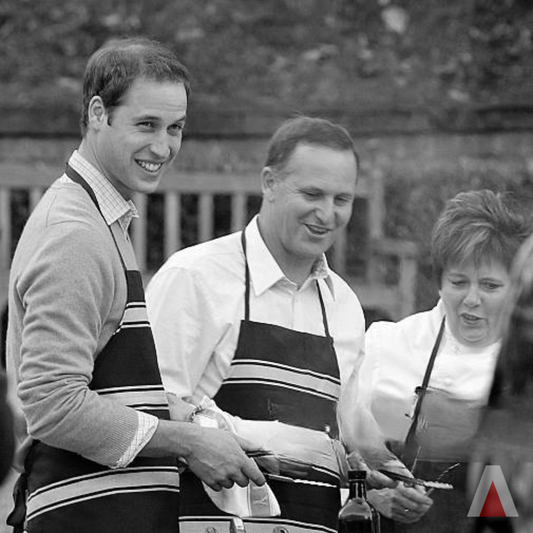
Perhaps the ultimate endorsement came when New Zealand's own culinary icon, Ruth Pretty, selected our Butchers Bratting Apron while catering for Prince William and Prime Minister John Key at a Government House BBQ. It was a proud moment that reinforced the apron's place in Kiwi culinary culture.
Today, with over 100,00 aprons sold, the Butchers Bratting Apron remains a core part of the Arrow Uniforms range. You'll find them in some of the best kitchens and food outlets across the country.
And, they're built to last. Made from highly durable, commercially launderable fabric, the stripes are woven directly into the yarn – so they never fade, no matter how many washes.
Join the Legacy
Whether you're a chef, butcher, café owner or the weekend BBQ king or queen – you too can wear a piece of uniform history. Slip on a Butchers Bratting Apron next time you cook, and wear it with pride.
Because being iconic isn't just about what you cook – it's what you wear while cooking that counts!

Avoiding Common Pitfalls in Procurement Contracts
Uniform procurement might seem straightforward – but up to 30% of uniform budgets are lost to poor planning, hidden costs, and supplier issues. Without careful planning, the process can become complicated and costly. Poorly constructed contracts can lead to supplier lock-in, hidden charges, delayed deliveries, and garments that simply don't meet the needs of your workforce.
In today's workplace, uniforms do more than meet dress codes – they convey brand identity, support team performance, and contribute to compliance and sustainability goals. That's why taking a strategic approach to procurement is essential.
1. Vague Specifications: A Costly Mistake
One of the biggest risks in uniform procurement is unclear or incomplete specifications. If you don't clearly define materials, fits, performance requirements, or delivery expectations, you may end up with garments that look fine but fail in practice. The more precise your specifications, the more likely you are to receive a product that works for your team.
Specifications should include details such as:
Fabric weight and composition (e.g. 200gsm, 65% polyester / 35% cotton)
Size grading and measurements across the full size range
Shrinkage tolerances (min/max)
Colour fastness and UV resistance ratings
Wash durability (e.g. tested to 50+ industrial washes)
Fit type and pattern (e.g. relaxed fit, drop shoulders)
Fastening types (e.g. YKK zippers, snap buttons)
Branding methods (e.g. embroidery, heat press)
Quality assurance (QA) tolerance limits
Labelling requirements (e.g. care instructions, garment origin)
Well-defined specs are your quality control foundation. Without them, you risk receiving inconsistent products, limited recourse for faults, and delays resolving issues.
2. Restrictive Supplier Contracts
Supplier exclusivity can sometimes seem like a practical move – but it can backfire. While strong, long-term relationships with a trusted supplier are valuable, your contract should never limit your ability to evolve.
A well-structured agreement might include:
Flexibility to scale up or down as staffing levels change
Allowances to trial new garments or adopt new technology
Clear performance expectations and review checkpoints
Exit clauses linked to missed KPIs or delivery failures
Your uniform should evolve alongside your workforce. Contracts should enable innovation – not stifle it.
3. Underestimating the Total Cost of Ownership
Uniform pricing is about more than the per-unit figure. Focusing only on the upfront cost often leads to hidden spend and operational inefficiencies over time.
Total uniform cost may include:
Freight and handling (especially for remote locations)
Branding and customisation fees
Storage or warehousing costs
Returns processing and credit issuance
Sample development and approval rounds
Portal setup and admin time
Consider longevity as well. A $30 shirt replaced every 6 months is more expensive long-term than a $60 shirt that lasts 2 years. Beyond price, the cost of staff discomfort, increased admin, or inconsistent appearance can erode brand trust and efficiency.
4. Aligning with Broader Procurement Standards
Uniform contacts should align with your company's wider procurement and ESG goals. This includes ethical sourcing, sustainability, safety standards, and supplier diversity.
For example, your garments might include:
REPREVE® fabrics made from post-consumer plastic bottles
Verified ethical supply chains through third-party audits
Compliance with NZ/AU safety standards (hi-vis, FR, etc.)
Programmes like AROUND™ also allow you to build circularity into your procurement by offering textile recycling and uniform takeback options – an increasingly important factor for values-led organisations.
5. Supplier Services Matter
More than just product delivery, your supplier should act as a partner. Features like real-time order tracking, online portals, and post-delivery reporting aren't luxuries – they're now the standard.
Look for suppliers who offer:
Implementation and rollout support
Integrated online ordering with live inventory
Clear returns and warranty handling
Reporting dashboards for spend and forecasting
Dedicated account management and responsive service
These capabilities reduce admin, support your teams, and ensure accountability.
A well structured uniform contract does more than secure a supplier – it protects your brand, your budget, and your people. By taking a strategic approach to procurement, you gain flexibility, transparency, and peace of mind. And most importantly, you ensure your workforce is equipped, comfortable, and aligned with your company's values.
The Smaller the Logo, the More Exclusive the Brand
Why Subtle Branding Speaks Louder in Today's Marketplace
We live in a world where logos are everywhere – splashed across shirts, stitched into caps, embossed on cars, and printed on packaging. Visibility is often the goal. But when it comes to premium branding, something fascinating happens:
The more exclusive the brand, the smaller the logo.
It may seem counterintuitive. Shouldn't high-end products shout their presence? Not quite. In the world of true prestige, exclusivity whispers. It doesn't need to prove itself – it simply is.
A Subtle Statement: Lacoste
Take Lacoste, for example. Its iconic crocodile is tiny – often just a few centimetres stitched on the chest. And yet, it speaks volumes.
Why? Because Lacoste doesn't need to scream. It's worn by people who appreciate timeless design, quality craftsmanship, and quiet confidence. The logo's purpose isn't to convince – it's to confirm.
Porsche: One Brand, Many Audiences
Let's shift gears to a different kind of prestige – Porsche. It's a masterclass in logo scalability and brand context.
On the desk of a CEO, the Porsche emblem might be etched into a luxury pen or subtly embossed on a leather notebook – discreet and deliberate
In a service centre, Porsche technicians wear uniforms with mid-sized logos – practical and professional, signaling brand alignment without shouting
On the racetrack, Porsche motorsport crew uniforms and vehicles feature bold, oversized logos – designed for maximum visibility and high-speed brand theatre
Each logo application reflects the audience and environment – from understated elegance to high-octane recognition.
Why Smaller Logos Signal More
There's psychology at play here:
When you don't need to prove something, you don't overstate it.
Smaller logos assume the observer already knows – that they're in the know. And that's the essence of exclusivity. It's a quiet confidence rooted in product, not promotion.
That's why bespoke suits, handcrafted watches, and luxury travel luggage often have little to no branding – just exceptional detail and deliberate design.
The Rule of Exceptions
Of course, not all branding is meant to be subtle. In streetwear or sportswear, for example, loud logos are part of the culture – think Nike, Supreme, or Red Bull Racing.
Here, visibility is identity. In those contexts:
Loud logos = belonging, energy, culture
Quiet logos = exclusivity, legacy, refinement
Understanding the why behind logo sizing is key to making the right brand choice.
What This Means for Uniform Branding
At Arrow Uniforms, we think deeply about how branding works – not just what a logo looks like, but what it says. A single logo can carry different meaning depending on its size, placement, and purpose.
Here's how we approach it:
Subtle lapel branding on an executive jacket = polish and prestige
Chest-level logos on retail uniforms = trust, approachability, consistency
Large back logos on event t-shirts = high visibility for fast-paced environments
Each application is intentional – because how you wear a brand matters just as much as the brand itself.
Final Thought
In branding, sometimes less really is more.
The smaller the logo, the more it trusts the world to recognise it – and that is the ultimate flex.
Talk to the Arrow team today about how we can help your brand come alive!
Subscribe to Stay Sharp!
Enter your email below to be the first to know about new blogs, promotions, product launches, business news, and more.