




Stay Sharp Blog
Explore expert insights, brand stories and practical tips from the team at Arrow Uniforms. From sustainable workwear trends and ethical sourcing to cost-saving strategies and uniform care, the Stay Sharp Blog helps you make informed decisions that keep your team looking sharp and performing at their best.
Stay Sharp Blog

How to Reduce the Total Cost of Ownership in a Uniform Programme
When looking at the cost of a uniform programme, the price of the garment is only one part of the picture.
How often garments need replacing, how uniforms are issued and returned, the durability of the fabrics you choose, and how effectively stock is managed can all have a significant impact on what your uniform programme costs over time.
Taking a longer-term approach can help reduce unnecessary spend while ensuring your team still has uniforms that look professional, perform well and are fit for the job.
Look beyond the initial garment price
It can be tempting to compare uniform options based on their upfront price alone.But a lower purchase price doesn't always mean a lower cost overall.
If a garment needs replacing more frequently because it fades, loses its shape or simply isn't suited to the demands of the role, those replacement costs can quickly add up.
Instead, consider the expected lifespan of a garment alongside its initial cost. A slightly higher investment in a durable, well-made uniform may delivery better value if it remains in circulation for longer.
This is particularly important for teams working in demanding environments where uniforms are worn frequently, washed regularly and expected to maintain a professional appearance.
Choose fabrics that suit the job
Durability starts with selecting the right fabric and garment for the working environment.
Consider how the uniform will actually be used. How often will it be worn and washed? Does the wearer need plenty of movement? Is the garment exposed to spills, heat or other demanding conditions? Will it nee to withstand commercial laundering?
Choosing fabrics based on the realities of the role can help extend garment life and reduce premature replacement.
It's also worth looking at the construction of the garment itself. Quality stitching, reinforced stress points and fabrics designed for repeated wear can all contribute to a uniform that performs for longer.
Take care of the uniforms you already have
Even the most durable uniform won't reach its full lifespan it it isn't cared for correctly.
Providing clear garment care instructions can help employees understand how their uniforms should be washed, dried and maintain. Small changes, such as avoiding unnecessarily high washing or drying temperatures, can help protect fabrics, colours and garment shape over time.
Making care information easily accessible to your team can help reduce avoidable damage and keep garments looking professional for longer.
Create a uniform closet
One of the simplest ways to reduce unnecessary uniform spend is to keep track of garments that have already been purchased but are no longer being worn.
When an employee leaves the business or changes roles, suitable uniform items don't always need to be discarded or forgotten about.
Consider setting up a uniform closet where clean, wearable returned garments can be stored and recorded. Keep track of the garment style, size, quantity and condition so you know exactly what is available before ordering something new.
For example, if a new employee requires a size 12 jacket and there's already one sitting unused in your uniform closet, it may be possible to reissue it rather than purchasing another.
Over time, this can make a real difference - particularly for larger organisations or teams with regular staff movement.
Have a clear process when employees leave
Uniform returns can easily be overlooked during the offboarding process.
Adding uniforms to your employee exit checklist creates a consistent process for recovering garments that may still have plenty of life left in them.
Once returned, garments can be assessed to determine whether they are suitable for reissue, need repair, can be repurposed or should be responsibly recycled.
The important part is knowing where those garments have gone rather than continually purchasing replacements while usable uniforms sit elsewhere in the business.
Keep better visibility over uniform ordering
Without a centralised way of managing uniforms, it can be difficult to see what has been ordered, who has received what and where unnecessary spend may be occurring.
A uniform management system can give your organisation greater visibility and control over ordering. With myArrow, organisations can manage their uniform programme through one centralised online platform, making it easier to manage wearers, control product selections and streamline the ordering process.
Setting appropriate ordering rules or allowances can also help ensure employees have what they need without unnecessary over-odering.
Review your programme regularly
Uniform requirements change as your organisation changes.
New roles may be introduced, teams can grow or shrink, and some garments may prove more popular or durable than others. Regularly reviewing your uniform programme gives you an opportunity to identify what's working and where costs could be reduced.
Look at which garments are being replaced most frequently, whether certain styles are consistently left unused, and whether your current range still suits the needs of your team.
These insights can help inform better decisions the next time your uniform range is reviewed.
Better value over the life of your uniform programme
Reducing the total cost of ownership isn't about simply choosing the cheapest uniform available.
It's about making informed decisions across the entire lifecycle of your uniforms - from selecting durable garments and appropriate fabrics to looking after them correctly, tracking what you already own and recovering uniforms when employees leave.
With the right garments and a more considered approach to uniform management, organisations can reduce unnecessary replacement and make their uniform investment work harder for longer.
Looking to get more form your uniform programme?
Arrow can help you select durable, fit-for-purpose uniforms and put the right systems in place to make managing them easier. Talk to our team about creating a uniform solution designed around the needs of your organisation.

How Accurate Uniform Sizing Improves Safety and Employee Experience
When a business thinks about uniform programmes, sizing is often viewed as a simple administrative task. However, getting uniform sizing right the first time can have a significant impact on employee comfort, workplace safety, operational efficiency, and overall cost.
From healthcare and hospitality to retail and corporate environments, a well-fitting uniform does much more than look professional - it helps employees perform their roles confidently and safely while reducing the hidden costs associated with exchanges, replacements, and downtime.
The Hidden Cost of Getting Sizing Wrong
An incorrectly sized uniform can create a ripple effect throughout an organisation.
When garments don't fit properly, employees may require exchanges, managers spend time coordinating replacements, and uniform administrators are left managing additional orders. This creates unnecessary delays and increases administrative workload.
For larger companies, even a small percentage of incorrectly sized garments can result in:
Additional freight and handling costs
Increased administrative time
Delayed onboarding for new employees
Excess stock and waste
Reduced employee satisfaction
Getting sizing right from the outset helps eliminate many of these avoidable costs.
Saving Time for Everyone Involved
One of the most immediate benefits of a right-size-first-time approach is time savings.
Employees receive garments they can wear immediately. Managers spend less time resolving sizing issues. Procurement and HR teams avoid the back-and-forth associated with returns and exchanges.
When uniforms fit correctly from day one, organisations can focus on what matters most - supporting their people and serving their customers.
Safety Starts with the Right Fit
Uniforms often play an important role in workplace safety.
Garments that are too large can create hazards by catching on equipment, restricting movement, or causing employees to trip. Clothing that is too tight may limit mobility, reduce comfort, and make it more difficult to perform physical tasks safely.
In industries such as healthcare, manufacturing, logistics, and hospitality, properly fitted uniforms help employees move comfortably and confidently throughout their shift.
A well-fitted uniform supports:
Freedom of movement
Comfort during long shifts
Compliance with workplace requirements
Reduced risk of snagging or catching on equipment
Improved confidence while performing daily tasks
When employees feel comfortable and unrestricted, they can focus more effectively on their work.
Better Employee Experience
Uniforms are often one of the first physical touchpoints employees have with their company.
Receiving a uniform that fits properly sends a strong message that the company values professionalism and employee wellbeing. It helps staff feel included, comfortable, and confident from their first day.
By contrast, receiving ill-fitting garments can be frustrating and may negatively affect first impressions of the workplace.
Investing in accurate sizing demonstrates care for the employee experience and contributes to higher levels of satisfaction and engagement.
Supporting Sustainability Goals
Incorrect sizing can also contribute to unnecessary waste.
Every exchange requires additional transportation, packaging, processing, and often leaves organisations with garments that cannot easily be reallocated.
By reducing returns and replacements, right-size-first-time programmes help companies minimise waste and make better use of resources.
For businesses working towards sustainability objectives, improving sizing accuracy is a simple yet effective step.
Making Right-Size-First-Time a Reality with SizeUp™
While sizing charts and measuring guides are useful, they can't replace the confidence of an expert fitting.
That's why Arrow developed SizeUp™ - our mobile fitting service that brings experienced fitters directly to your workplace. Whether you're outfitting a team of 10 or rolling out uniforms to thousands of employees across multiple sites, SizeUp™ helps ensure every wearer is professionally fitted from the outset.
Our team captures accurate sizing on-site with minimal disruption to your working day. We then provide sizing information in the format that best suits your organisation, whether that's through myArrow™, a bulk order spreadsheet, or individual staff records.
The result?
Fewer exchanges and returns
Faster uniform rollouts
Less administration for HR and procurement teams
Better fitting uniforms from day one
A smoother experience for every employee
Getting the fit right isn't just good for your people - it's good for your business.
The Bottom Line
Uniform sizing isn't just about measurements - it's about creating a safer, more efficient, and more positive experience for employees and employers alike.
By adopting a right-size-first-time approach, businesses can save time, reduce costs, support workplace safety, improve employee satisfaction, and minimise waste.
When uniforms fit properly from day one, everyone benefits.

How to Choose Quality Uniforms Without Overspending
Choosing uniforms for your team often feels like a trade-off: quality vs cost. But in reality, the most cost-effective uniforms are rarely the cheapest upfront.
Business that prioritise durability, functionality, and fit don't just improve their team's appearance – they reduce long-term costs, minimise replacements, and strengthen their brand.
So, how do you strike the right balance?
This guide breaks down how to invest in quality uniforms – without overspending, using practical, real-world considerations.
Look Beyond the Price Tag
One of the most common traps in uniform purchasing is focusing too heavily on the initial price. While it's an important factor, it rarely tells the full story.
Uniforms are worn daily and washed frequently, which means their true cost is revealed over time. Lower-priced garments may seem like a smart saving at first, but if they fade, lose shape, or need replacing within months, those savings quickly disappear.
A more effective approach is to think in terms of cost per wear. When a uniform lasts longer and continues to perform, it naturally becomes the more economical choice – regardless of its upfront price.
Fabric Is Where Quality Really Lives
At a glance, many uniforms can look similar. The real difference becomes clear after weeks or months of use – and that difference almost always comes down to fabric.
High-quality materials are designed to handle the realities of the workplace. They maintain their structure after repeated washing, resist fading, and support comfort across long shifts. In fast-paced environments, this isn't a luxury – it's essential.
Lower-quality fabrics, on the other hand, tend to break down quickly. This leads to more frequent replacements, inconsistent presentation across teams, and added pressure on budgets.
When you invest in the right fabric, you're not just improving appearance – you're protecting long-term value.
The Hidden Cost of Poor Fit
Fit plays a much bigger role than many businesses expect. It influences not only how uniforms look, but how they're used day to day.
When uniforms don't fit properly, they're often avoided or replaced prematurely. This can result in unused stock, repeated ordering, and unnecessary waste. Over time, these small issues add up.
By contrast, when uniforms fit well, they're worn confidently and consistently. Staff are more comfortable, and garments tend to last longer because they're used as intended.
Spending time upfront on sizing – whether through fittings, trials, or detailed guides – can significantly reduce these hidden costs.
Simplicity Drives Efficiency
It's natural to want flexibility and choice when designing a uniform range, but too much variation can create inefficiencies.
A streamlined approach – focused on versatile, well-designed core pieces – often delivers better outcomes. It simplifies ordering, reduces excess inventory, and ensures consistency across teams.
From a cost perspective, simplicity also enables better buying power and easier management over time. Rather than managing dozens of options, businesses can focus on a curated range that works across roles and environments.
Longevity Starts with Care
Even the best-designed uniform needs to work within the realities of daily care.
Garments that require special treatment or high maintenance can shorten their own lifespan, simply because they're harder for staff to manage. In contrast, uniforms designed for easy care – those that wash well, retain their shape, and require minimal effort – tend to last significantly longer.
Clear, practical care guidance can also make a noticeable difference, helping teams maintain a consistent, professional appearance without added complexity.
The Value of the Right Partner
Choosing the right supplier can have a direct impact on both cost and outcomes.
A good uniform partner doesn't just provide products – they help you make better decisions. They understand the demands of your industry, guide you towards appropriate fabrics and fits, and help avoid unnecessary spend on features that don't add value.
This kind of partnership reflects a balance of expertise, trust, and guidance, ensuring your uniform strategy is both practical and sustainable over time.
A Smarter Way to Think About Uniforms
The most effective uniform strategies don't treat uniforms as a one-off purchase. Instead, they're approached as an ongoing system – one that considers durability, consistency, and lifecycle from the outset.
This shift in thinking allows businesses to better manage costs, reduce waste, and create a more reliable experience for their teams.
Key Takeaway
Choosing quality uniforms without overspending isn't about compromises – it's about making informed decisions.
When you focus on long-term value rather than short-term savings, uniforms become more than just a necessity – they become a smart investment.
Uniforms are part of your team's everyday experience. They influence comfort, confidence, and how your business is perceived.
When chosen well, they don't just meet a need – they quietly support performance, every single day.

What to Look for in a New Zealand Uniform Supplier
Choosing the right partner for quality, consistency, and long-term value.
When it comes to sourcing uniforms for your team – whether in healthcare, hospitality, retail, or corporate sectors – the right supplier isn't just a vendor. They're a long-term partner in your brand, culture, and operations. In New Zealand's competitive and quality-driven market, selecting a uniform supplier involves more than comparing prices or browsing catalogues.
Here's what to look for when evaluating a New Zealand uniform supplier, so you can make a confident, informed decision.
1. Industry Expertise and Specialisation
A great uniform supplier understands your industry's unique demands. From infection control in healthcare to brand consistency in retail, industry knowledge shapes everything from fabric selection to fit and functionality.
Look for:
Experience in your sector (e.g. aged care, hospitality, customer service)
A portfolio of clients similar to your business
Product design aligned with real-world needs (e.g. moisture-wicking scrubs, stain-resistant aprons)
Why it matters: Uniforms aren't just clothing – they're tools for performance. Expertise ensures you get garments that work as hard as your team does.
2. Local Knowledge, Global Capability
Working with a New Zealand-based supplier means faster communication, easier logistics, and an understanding of local expectations – from cultural values to climate demands. But the best suppliers balance this local knowledge with global sourcing power and scalable operations.
Look for:
NZ-based account management or customer support
Manufacturing transparency – onshore or offshore
Ability to scale with your business across locations or regions
Why it matters: You want a supplier who understands NZ workplaces, but also has the systems and supply chain strength to delivery consistently.
3. Sustainable and Ethical Practices
Sustainability is no longer optional – it's a core value for future-focused businesses. Your uniform supplier should be actively reducing environmental impact and ensuring ethical sourcing across their supply chain.
Look for:
Use of recycled or eco-friendly fabrics
Transparent sustainability initiatives
Partnerships with ethical manufacturers
Options for uniform recycling or end-of-use programs
Why it matters: Your brand's sustainability story is only as strong as your partners'. Uniforms offer a visible, tangible way to show your environmental values in action.
4. Customisation and Branding Options
Uniforms should reflect your brand – visually and practically. From embroidery and screen-printing to fabric colours and fits, a good supplier offers customisation without compromising durability.
Look for:
In-house embroidery or branding services
Style consultations or design mock-ups
Consistent branding across diverse garments or roles
Why it matters: Cohesive branding across your team enhances customer trust and helps employees feel part of something bigger.
5. Ease of Management and Ordering
A modern supplier should make managing your uniform program simple. That means intuitive ordering, inventory tracking, and clear communication. Digital platforms are especially valuable for multi-site or growing teams.
Look for:
Online uniform portals (like Arrow's myArrow™)
Centralised invoicing and reporting
Fit kits and sizing tools
Reliable delivery timeframes and stock availability
Why it matters: A streamlined uniform process reduces admin time, avoids supply issues, and ensures your team is always outfitted and ready.
6. Fit, Comfort, and Durability
A uniform isn't just about appearance – it has to perform. Poorly fitting or uncomfortable garments affect morale, mobility, and even safety. Your supplier should offer garments built to last, designed to move, and backed by real-world testing.
Look for:
Garment trials or wearer testing programs
Size-inclusive ranges and adaptive fits
Fabrics that suit the job (e.g. antimicrobial, temperature-regulating, quick-dry)
Why it matters: Happy, comfortable staff deliver better service. Uniforms that fit well boost confidence and reduce replacement costs.
7. Proven Track Record and References
Your uniform supplier should be able to demonstrate reliability through customer success stories, testimonials, and long-standing partnerships. These aren't just feel-good stories – they show the supplier's ability to deliver over time.
Look for:
Industry case studies and client testimonials
Clear documentation of processes and support
Awards, certifications, or recognitions (e.g. sustainability, innovation)
Why it matters: A supplier that delivers results for others is more likely to do the same for you.
Final Thoughts
Choosing a uniform supplier in New Zealand is more than a transactional decision – it's a strategic partnership that reflects your brand, values, and team culture.
By focusing on expertise, sustainability, local support, and easy of management, you'll find a supplier who not only delivers garments, but helps your team feel confident, connected, and ready to perform.

Is Your Uniform Ready for 2026? A Smart Business Owner’s Checklist
Why Uniform Reviews Matter More Than Ever
Uniforms are more than just fabric and logos. They're your brand on display, your team's comfort, and your customers' first impression. Yet, many businesses treat uniform updates reactively – waiting until things fall apart before acting.
If you're heading in 2026 without reviewing your current uniform setup, you could be missing major opportunities for savings, efficiency, and brand consistency.
This guide walks you through a practical 7-step uniform checklist to ensure your business is ready for whatever this year brings.
1. Brand & Consistency Check
Ask yourself:
Do your colours and logos still reflect your current brand identity?
Does the uniform feel modern and aligned with your brand's tone?
Are embroidery or branding details still sharp and readable?
Tip: If you've updated your brand visuals or messaging, it's time to align your uniforms too.
2. Fit & Comfort Audit
Today's workforce is diverse – and your uniform should reflect that. Check:
Is that fit inclusive across body types?
Are fabrics breathable, flexible, and seasonally adaptable?
Do staff feel confident and comfortable all day?
Inclusive, well-fitting uniforms improve morale, reduce complaints, and support retention.
3. Durability & Performance Review
Uniforms are an investment. Make sure they're paying off.
Are garments withstanding frequent washing?
Any signs of fading, piling, or seam breakdown?
Are stains becoming harder to remove?
Durable uniforms lower long-term costs – because buying cheap often mean buying twice.
4. Hygiene & Wash Practicality
Especially important for healthcare, hospitality, and trade industries:
Are uniforms easy to care for?
Do they dry quickly and retain a professional look between washes?
Easy-care uniforms mean less stress for your team and more consistent presentation for your brand.
5. Role Clarity & Team Structure
Do your uniforms help distinguish:
Front-of-house vs. back-of-house?
Clinical vs. admin roles?
Management from team members?
Clear visual hierarchy helps customers and staff alike – without compromising brand consistency.
6. Stock & Onboarding Readiness
Planning to grow in 2026? Make sure:
You have core stock for new hires
Sizing is recorded and easy to reorder
Your uniforms policy is up to date.
A streamlined onboarding process improves new hire experiences and reduces downtime.
7. Budget & Forward Planning
Don't wait for urgent replacements. Ask:
What needs updating now vs. in six months?
Can you refresh select items instead of full replacements?
Is your uniform spend aligned with usage and wear-time?
Plan now to avoid last-minute orders – and potentially higher costs down the line.
Ready to Refresh? Here's How Arrow Can Help
At Arrow Uniforms, we don't just supply clothing – we design scalable, brand-aligned, and functional uniform systems that work for your team, your roles, and your budget.
From inclusive sizing and seasonal layering to embroidery and sustainable fabric options, we're here to help you build a future-fit uniform plan.
Let's take the guesswork out of uniform planning.Book a uniform review today!
Bulk vs On-Demand Uniform Supply: Which Model Fits Your Team Best?
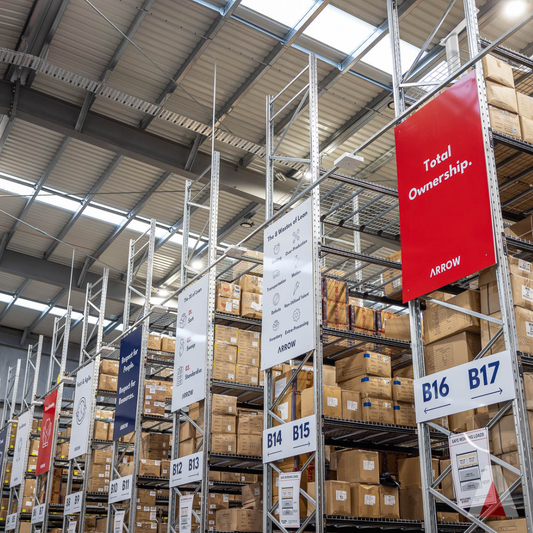
Once you've got your brand and identity sorted out, you need to order uniforms for your team.Uniform procurement isn't just about how many items you order, it's about choosing the supply model that fits your business.
The way you source uniforms can influence cash flow, sustainability, staff satisfaction, and operational efficiency.
Some organisations thrive on bulk ordering. Others need the agility of on-demand fulfilment. Increasingly, many are choosing a hybrid approach.
They key is finding the model, or combination, that works for your workforce, budget, and long-term plans.
Bulk Ordering: Efficient, Scalable – Best for Stability
Best suited for:
Stable headcounts
Centralised teams
Predictable uniform usage
Benefits
Secure volume discounts (often 10-25% savings depending on quantity and branding)
Roll out new designs across your entire team at the same time
Centralise distribution and maintain consistent quality control
Trade-offs:
Requires accurate sizing predictions – errors can lead to reorders and delays
You may order too much stock tying up valuable cash
Storage and inventory management become essential (and resource-intensive)
Front-loading costs can impact cash flow and limit flexibility if team structures change
On-Demand Supply: Flexible, Sustainable – Best for Change
Best suited for:
Remote or rotating teams
Seasonal or project-based hiring
High staff turnover or role changes
Benefits:
Staff order their own sizes, reducing misfits and returns
Eliminates overstocking and warehousing needs
Supports personalised branding or role-based variations without excess risk
A 2023 Unifi study found that on-demand systems can reduce uniform waste by up to 30% thanks to fewer excess units and more accurate sizing
Trade-offs:
Slightly higher per-unit cost
Relies on robust supplier technology and fulfilment infrastructure
The Hybrid Model: Control Meets Agility
For many organisations, the best option is both.
Typical approach:
Bulk orders for standard, stable needs
On-demand top-ups for new hires, size changes, or seasonal shifts
Why it works:
Achieves volume savings on core needs
Maintains flexibility for changes in staffing or branding
Reduces waste and improves sustainability outcomes
Increases team satisfaction with better fit and timely delivery
Key Questions to Find Your Best-Fit Supply Model
Ask yourself:
How often does your team change or grow?
Do you have storage capacity for stock?
Is branding consistent or varied by role/site?
Are you aiming to reduce waste or streamline admin?
Do staff work across multiple locations or shifts
The right model should support performance, sustainability, and morale – not just procurement.
If in doubt, ask Arrow Uniforms!Our expert team have deep experience across both approaches and can make a recommendation to you on what would work best all things considered. Sometimes it's timing of rollout, sometimes it's cash, sometimes it's having an appropriate employee internally to manage the ordering issuing and stock levels of your uniforms. Sometimes it's best to leave it to a specialist uniform company like Arrow Uniforms.We will advise you on what the options are for you to decide.

How We Helped a Major Food Manufacturer Save Over $250,000 on Uniform Costs
A few years ago, in pre-COVID era, a well-known New Zealand food manufacturer with a 130-strong, 24/7 workforce approached Arrow Uniforms with a specific need: a customised head covering to improve hair control on their production line.
Designing and manufacturing specialist garments is second nature to the Arrow team, and the solution was swiftly delivered. But it was a casual comment from the company's new Procurement Manager that sparked a much bigger conversation:
"I'm new here and keen to make a difference – I need to find real savings."
That simple remark promoted Arrow's founder to offer an unexpected suggestion. Observing that the facility operated around the clock and relied on commercially laundered hire garments – with every employee changing into fresh white daily – he proposed a different approach:
Have you ever thought about bringing laundering in-house?
Buy the garments. Control the process. Own the outcome. Bank the savings.
The Results Were Game-Changing
The Procurement Manager took the idea and ran with it. Within days, the business had crunched the numbers and built a practical plan. They went on to:
Build a double Skyline garage for onsite laundering
Install a commercial washer and dryer
Set up garment racking and a basic sorting system
Hired a part-time staff member to manage the laundering
Purchased a full wardrobe of our uniforms, crafted in durable, industry-specific fabrics
The result? The project broke even within the first year. In a few short years, after factoring in wages, utilities, and consumables like detergent, the company had saved over $250,000 – a direct boost to their bottom line.
Beyond Financial Savings
The impact extended beyond cost savings:
Garment Longevity: Arrow's durable uniforms reduced replacement frequency.
Operational Awareness: The team discovered they'd been paying rental fees even during staff absences and shutdowns.
Community Connection: With spare laundering capacity, they began washing local school rugby jerseys on weekends – a small but powerful gesture of community goodwill.
Why Buying Can Beat Hiring
This success story highlights a powerful business insight: for large organisations, purchasing uniforms outright – combined with a smart operational plan – can deliver far greater value than long-term garment hire.
With Arrow Uniforms, businesses gain more than just a supplier. They partner with a team offering:
Access to over 250,000 garments in stock
Onsite embroidery for fast, accurate branding
myArrow™, a smart uniform management platform
The AROUND recycling programme for end-of-use uniforms
Ready to Rethink Your Uniform Strategy?
Arrow Uniforms has helped businesses in food production, healthcare, logistics, security, and hospitality gain control of their uniform operations – saving money, enhancing brand image, and delivering real impact.
Talk to Arrow Uniforms today.We’ll help you elevate your brand, streamline your uniform management, unlock real savings – and bring some creativity and fun to your uniform journey!

Why Businesses Are Switching to Centralised Uniform Systems
Managing uniforms across departments or locations can be a logistical headache – unless you’ve got the right system. That’s where centralised uniform management comes in.
Arrow’s full-service model, powered by the myArrow™ platform, helps streamline ordering, track inventory, and reduce admin – all while supporting brand consistency and smart procurement. Here’s why more businesses are making the switch.

The Hidden Costs of Cheap Uniforms: The Long-Term Price of Short-Term Savings
Cheap uniforms may save you money upfront — but over time, the cost adds up in replacements, discomfort, and brand damage.
From poor fit to premature wear, low-cost garments can quietly drain your budget and morale. At Arrow, we believe in spending smarter: investing in quality that supports your team, your image, and your bottom line.

Why More Equals Less: How Investing in Quality Uniforms Saves Money Over Time
Cheap uniforms cost more than you think. Frequent replacements, inconsistent branding, and staff discomfort all add up. Arrow’s “1 Wearing, 1 Washing, 1 Waiting” approach helps teams stay sharp while reducing waste, admin, and hidden costs.
By investing in durable, comfortable workwear, businesses spend less over time — and look better doing it.
Subscribe to Stay Sharp!
Enter your email below to be the first to know about new blogs, promotions, product launches, business news, and more.